It is 2pm on a hot afternoon in July and the air conditioning just stopped working. You remember that about a year ago someone came the same day, fixed it quickly, and charged a fair price. They gave you a business card. You have no idea where it is.
The plumber who knew exactly what the issue was. The electrician who showed up on time and did not leave a mess. The cleaning service you had to chase down a number for when you needed them again. The information exists somewhere. It is in an old email, on a card in a drawer, or just gone.
A CRM is a practical fix for this. It is used mostly in business contexts, but the core function, keeping track of people and the details that matter, applies just as well at home.
Lattney offers a personal CRM you can start using today, no credit card required.
What is a personal CRM?
A personal CRM is a tool for organizing contacts and everything attached to them. Contact details, notes from past interactions, tasks, reminders, and a running history of each relationship.
For home management, that means every contractor and service provider has their own record. You know who they are, what they do, what you paid last time, and when you last used them. When something breaks or needs attention, the information is already there.
How a CRM helps you manage home contractors
Here is what changes when you start tracking contractors in a CRM:
- All contact information in one place
- Notes on every contractor
- Reminders for maintenance and follow-ups
- A record of what you paid
- Your own notes for future reference
Here is what each one looks like in practice.
1. All contact information in one place
Every contractor gets a contact record. Name, company, phone number, email, and any other details worth keeping. No more digging through old emails or hoping a business card survived.
In Lattney, you can store multiple phone numbers and email addresses per contact, add a website link, and connect a contractor to their company record. If someone works for a local service company, both are in the system and linked.
2. Notes on every contractor
After every job, add a note. What work was done, what it cost, how long it took, whether you would use them again. A few sentences is enough.
Over time those notes build a real picture. Before calling someone back, you can see the history and remember what working with them was actually like. Before calling someone new, you can check whether anyone already in your contacts covers that trade.
Custom fields in Lattney let you record the things you find yourself trying to remember every time. Trade type, hourly rate, whether they require a deposit upfront. Whatever is relevant to how you actually use the information.
3. Reminders for maintenance and follow-ups
A lot of home maintenance runs on a schedule. The HVAC service before summer. The gutter cleaning twice a year. The filter replacement every three months. Most of it is easy to forget until something goes wrong.
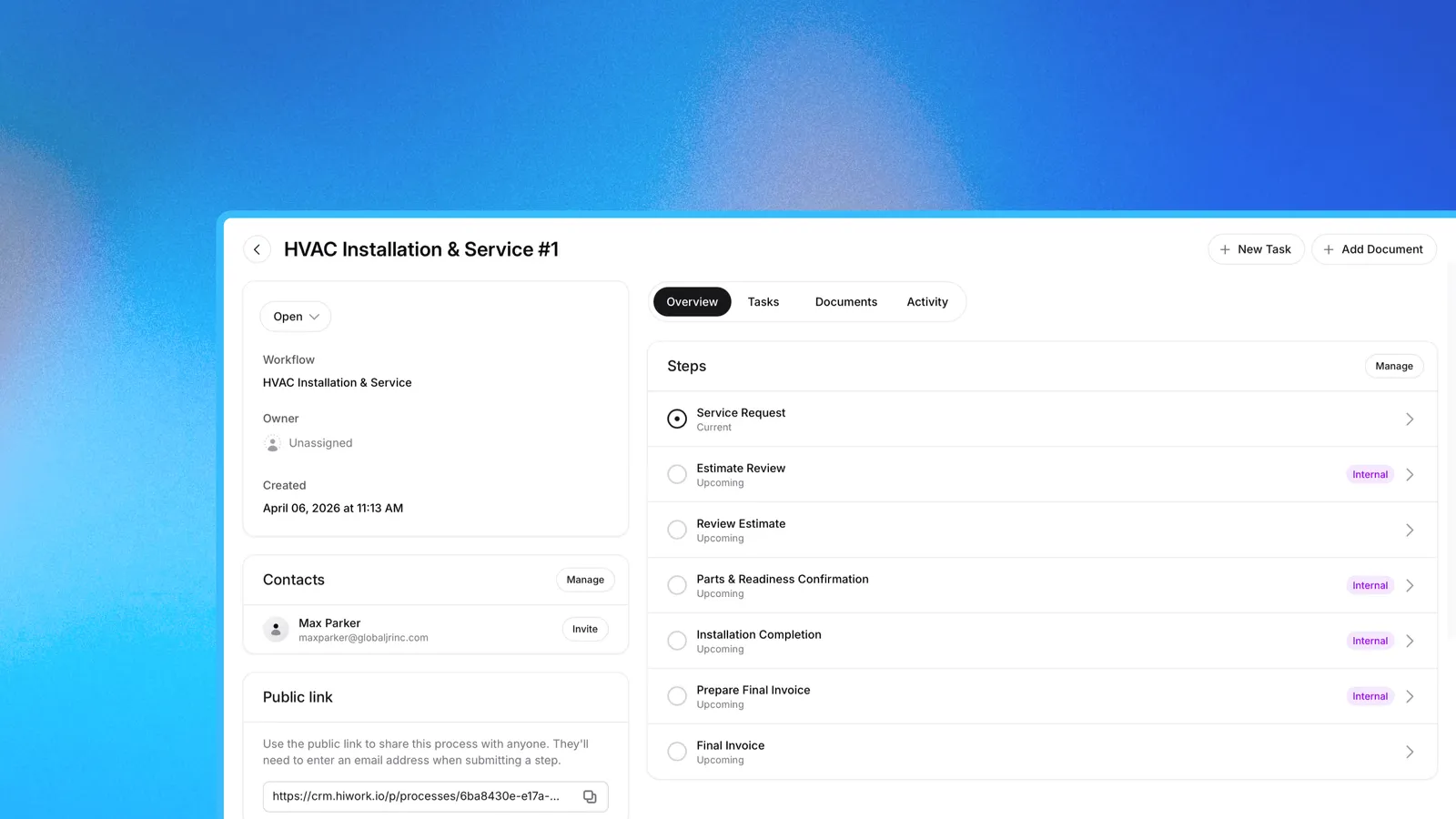
Tasks in Lattney attach directly to the relevant contact. Set a task on your HVAC contractor to schedule the annual service in April. Set one on the pest control contact for the next quarterly visit. The task shows up in the task view when it is due, alongside everything else that needs attention that day.
Tasks also work for follow-ups after work is done. A note to check whether a repair held up after a few weeks, or a reminder to get a quote from someone you want to compare with a current contractor.
4. A record of what you paid
Add a note after every job with what was done and what you paid. Over time this becomes a useful reference. You know what a reasonable price looks like for common work. You know whether costs have gone up between visits. When a new contractor quotes you, you have something to compare it against.
For rental properties or homes managed by more than one person, Lattney supports team accounts. Contact records and notes are shared with whoever needs access, so nobody is working from incomplete information.
5. Your own notes for future reference
Not every contractor is worth calling again. A note that says “took three visits to fix the same problem” or “final bill was significantly higher than the quote” is exactly the kind of detail that fades quickly and matters a lot when you need that type of work done again.
A few sentences after each job means the next decision is based on your own experience, not on starting from scratch and hoping the next person works out.
Tips for making it a habit
A CRM for home management works when it becomes routine, not when it is treated as a project to get perfect.
- Add notes right after the work is done, not a week later when the details have faded.
- Keep records current. If a contractor changes their number or switches companies, update it while you still have the information in front of you.
- Use contact lists to group contractors by trade. Plumbers in one list, electricians in another. Finding the right person quickly is the whole point.
- Add custom fields for whatever you track repeatedly. Every home is different.
The goal is not an elaborate system. It is having the right information available when something needs fixing at an inconvenient time, which is most of the time.
Lattney offers a 14-day free trial to use. Contacts, notes, tasks, custom fields, and contact lists are all included with no credit card required. Team accounts are available if more than one person manages the property.